
Decree No. 87-712 of August 26, 1987 classifies the replacement of bulbs and light tubes as tenant repairs, alongside switches, power outlets, and fuses. This classification requires the tenant to ensure the proper functioning of these elements throughout the lease duration. The question arises at the time of departure: should functional bulbs be left behind, and which ones exactly?
Bulbs and fixtures in rental: a legal distinction to know
The 1987 decree specifically targets bulbs, not fixtures. A ceiling light, wall sconce, or chandelier installed by the landlord before the tenant’s arrival remains part of the housing equipment. The bulb that screws into it, however, falls under the tenant’s routine maintenance.
The confusion between the two is common. A tenant who takes a chandelier provided by the landlord risks a deduction from the security deposit. Conversely, removing their own fixtures (a ceiling light purchased to replace a bare socket, for example) poses no issue, provided the original socket is returned.
On this point, the question of whether to leave bulbs in a rental according to MetamorpHouse provides additional insight into the respective obligations of the tenant and the landlord.

Decree No. 87-712: what the tenant must replace before the exit inventory
The annex of the decree explicitly lists the maintenance responsibilities of the tenant regarding the electrical installation:
- The replacement of bulbs and light tubes, regardless of their type (incandescent, halogen, standard base LED)
- The replacement of defective switches, power outlets, and fuses
- The connection of electrical wires as part of minor repairs
The tenant must return functional bulbs in all light points that had them upon arrival. In practice, on the day of the exit inventory, each socket must be equipped with a working bulb.
A nuance applies to wear and tear. If an electrical installation has become dangerous or if a light fixture is structurally defective (melted socket, damaged wiring), the repair is the landlord’s responsibility, not the tenant’s. Wear and tear shifts the burden to the owner, even for an item listed among tenant repairs.
Integrated LED bulbs in equipment: a special case during the move
Recent homes increasingly feature non-removable LED bulbs integrated into hoods, bathroom mirrors, or recessed spots. These bulbs do not screw into a standard socket and cannot be replaced like a simple light tube.
The legal qualification changes. An integrated LED is part of the equipment itself. If it fails, the repair depends on the age of the device and the cause of the failure. An LED mirror provided by the landlord whose backlighting stops working after several years generally falls under wear and tear.
The tenant is not required to disassemble equipment to attempt to replace an LED soldered to a circuit board. This operation would fall outside the scope of tenant repairs defined by the decree.
What to note on the inventory for these devices
At both entry and exit, each integrated spot, each LED strip, and each fixed lighting device deserves a separate line on the document. Noting “works” or “does not work” is sufficient, but the absence of mention creates a real evidentiary risk.
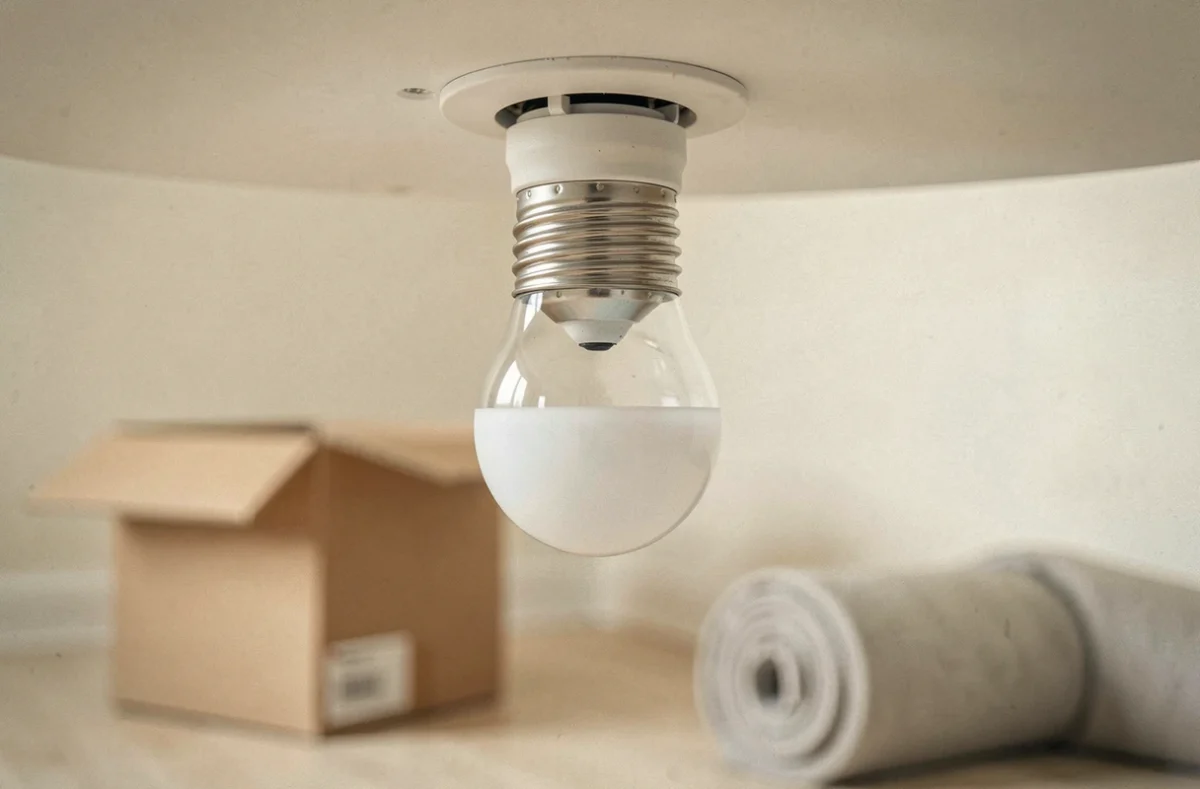
Absent entry inventory: what are the consequences for the return of bulbs
Without an entry inventory, the property is presumed to have been received in good condition regarding tenant repairs. This presumption, unfavorable to the tenant, means that at the time of exit, the landlord may consider that all bulbs were functioning upon arrival.
The tenant wishing to contest must provide evidence (dated photos, testimonies, written exchanges with the landlord). In the absence of these elements, any missing or burnt-out bulb may justify a deduction from the security deposit.
The unit cost of a bulb remains modest, but the multiplication of light points in a property can increase the total. In an apartment with about ten fixtures, complete replacement represents an amount that, added to other deductions, becomes significant.
What the tenant can do to protect themselves
- Photograph each light point on the day of entry, with the date visible on the file
- Notify the landlord in writing of any missing bulb or defective equipment within the first few days
- Keep all exchanges (emails, registered letters) throughout the lease duration
- On the day of exit, check that each socket contains a functional bulb before the landlord arrives
Security deposit and missing bulbs: what the landlord can retain
The landlord has a legal period after the return of the keys to refund the security deposit. If the exit inventory reveals missing or burnt-out bulbs, they may make a deduction, provided it is justified by a comparison between the entry and exit inventories.
The deduction must be proportional. A landlord who charges for bulb replacements at a rate significantly higher than the market price would expose themselves to a dispute. Similarly, a deduction without detailed justification is contestable by the tenant.
Disputes over bulbs are almost always resolved before reaching a court. A few new bulbs placed on the morning of the inventory are enough to avoid any discussion. The cost is negligible compared to the expenses and time that a disagreement over the return of the security deposit would entail.