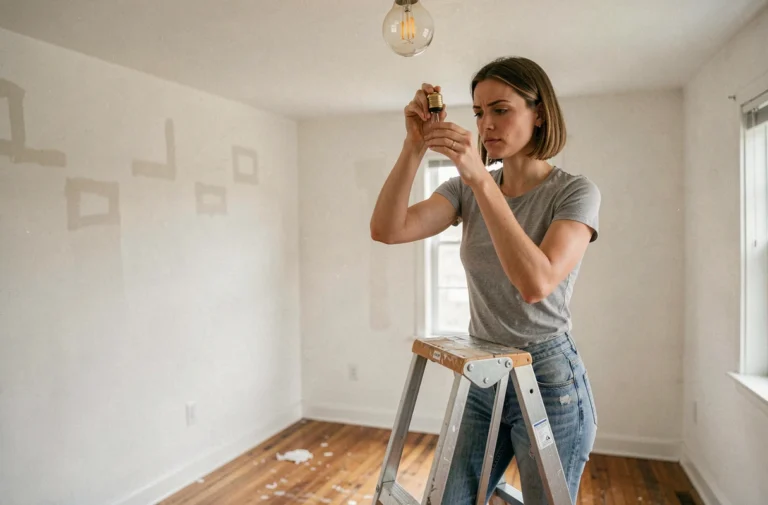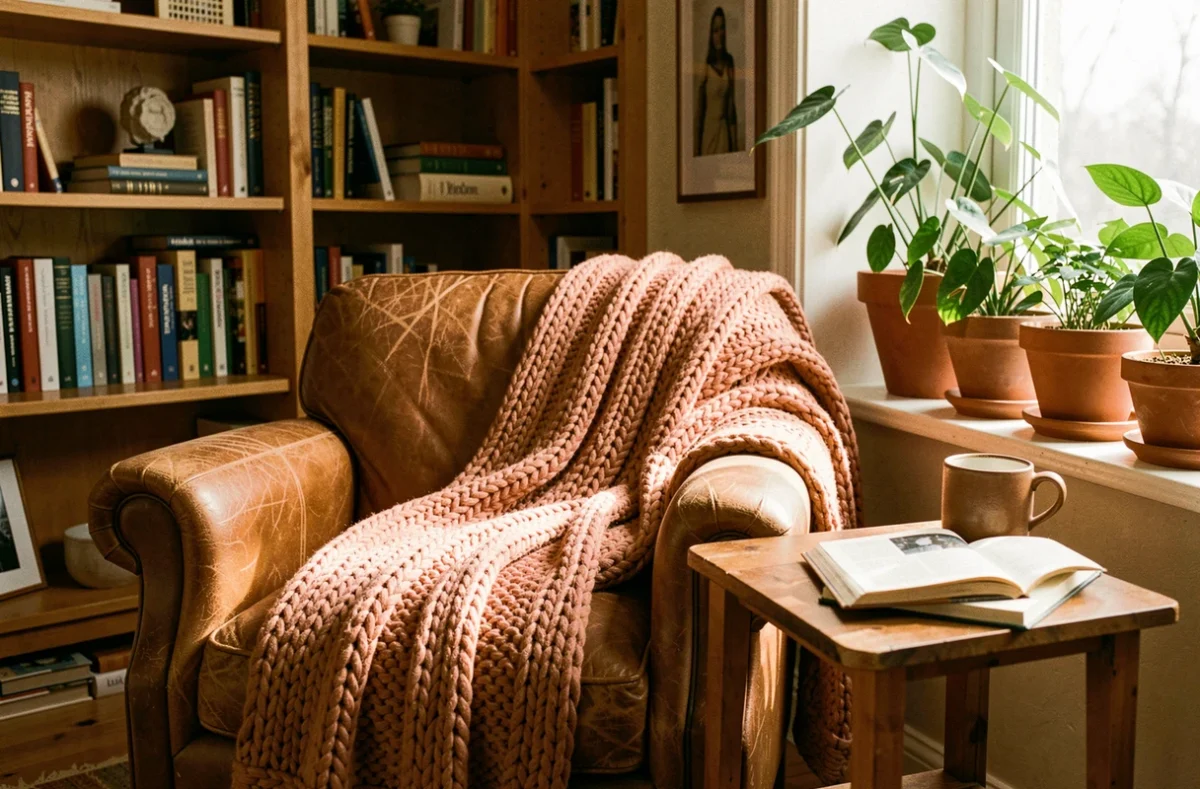
A living room where you sit on the floor because the sofa is too stiff, a bedroom where the white light from the ceiling fixture prevents relaxation: we’ve all experienced a space that, on paper, ticks the right boxes but feels cold in practice. Creating a warm interior isn’t about a shopping list of decor items. It’s about layering (light, materials, colors, objects) calibrated to how we actually live in each room.
Layered Lighting: The Foundation of a Room Where You Stay
The first instinct in a cold room is often to change the wall color. We would do better to start with the lighting. Poorly distributed lighting stiffens any space, even if painted in a warm tone.
The most effective approach is to layer multiple types of light sources in the same room. There are four levels: general indirect lighting (diffusing pendant, LED strip directed towards the ceiling), task lighting (reading lamp, desk lamp), accent lighting (spotlight directed at a painting, a niche) and purely decorative elements (string lights, candles, floor lamps).
A crucial point not to overlook: the variation in intensity. A dimmer on the main source radically changes the atmosphere of a living room between a dinner and a movie night. Opinions vary on the choice between dimmable LEDs and filament bulbs, but in both cases, we seek a color temperature around 2,700 K for a cozy effect.
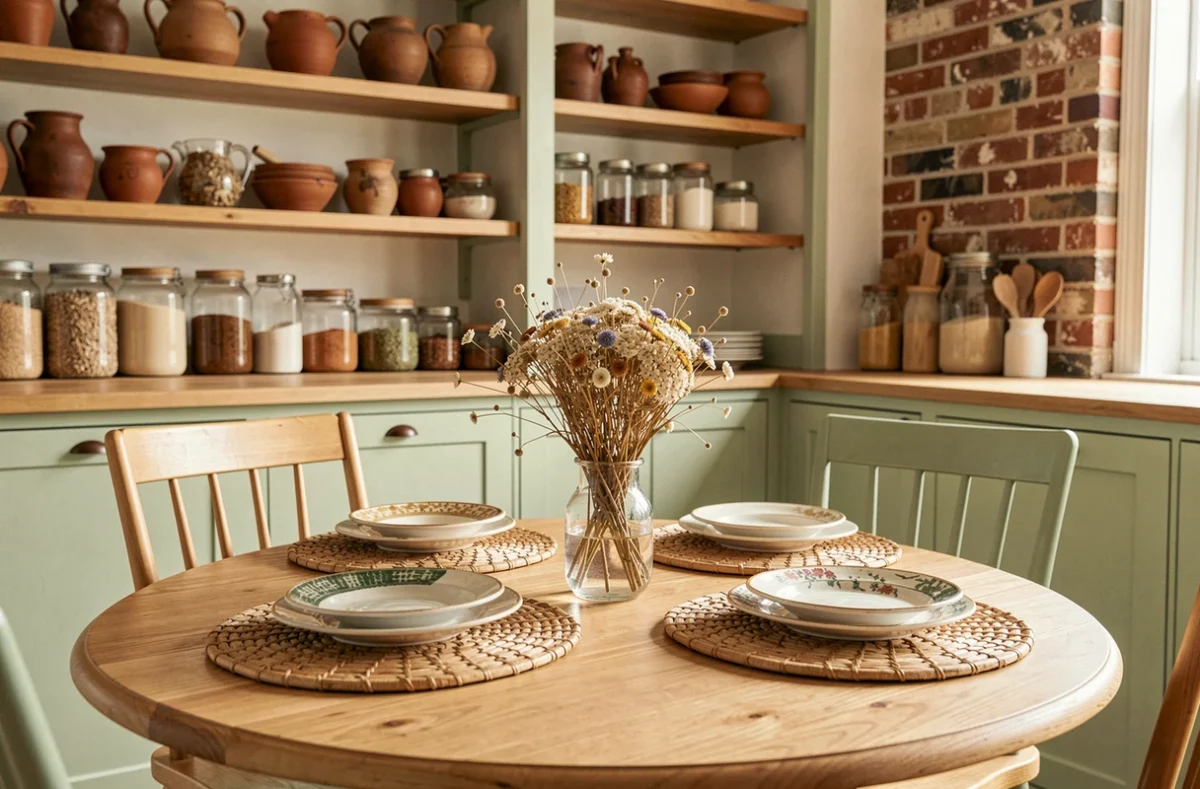
For concrete ideas on interior layout and decoration, one can consult specialized platforms like https://www.labonnemaison.fr/ that gather useful resources on the subject.
Natural and Repairable Materials for a Sustainable Warm Interior
Wood, linen, boucle wool, handmade ceramics: these materials appear in all decor guides. What is less often mentioned is the criterion that should guide the choice among them: repairability and the end-of-life of the material.
A certified solid wood piece can be sanded, stained, and repaired. A melamine particle board cannot. A washed cotton cushion with a removable cover can be machine-washed and replaced. A composite textile glued to its foam ends up in the trash at the first snag.
- Solid wood (oak, beech, ash) provides visual warmth and ages well, provided it is treated with an oil or a matte varnish that shows the grain.
- Removable textiles (zippered covers, detachable throws, eyelet curtains) allow for refreshing the ambiance of a room without replacing the furniture.
- Mineral materials like stoneware or terracotta add a raw texture that contrasts with soft fabrics, without compromising durability.
The idea is not to ban all synthetic materials but to concentrate natural materials where they are touched: seating, floor underfoot, tabletop surface. The physical contact with a living material changes the perception of comfort much more than an accent wall.
Warm Color Palette: Choose a Unifying Thread, Not a Single Color
There are many recommendations for terracotta tones, sandy beiges, and sage greens. The problem is that applying a single trendy color to an entire room results in a flat outcome.
What works better: starting from an existing element that you love (a rug, an antique piece, a work of art) and extracting two or three tones from it. You get a palette tied to your own interior, not to a catalog.
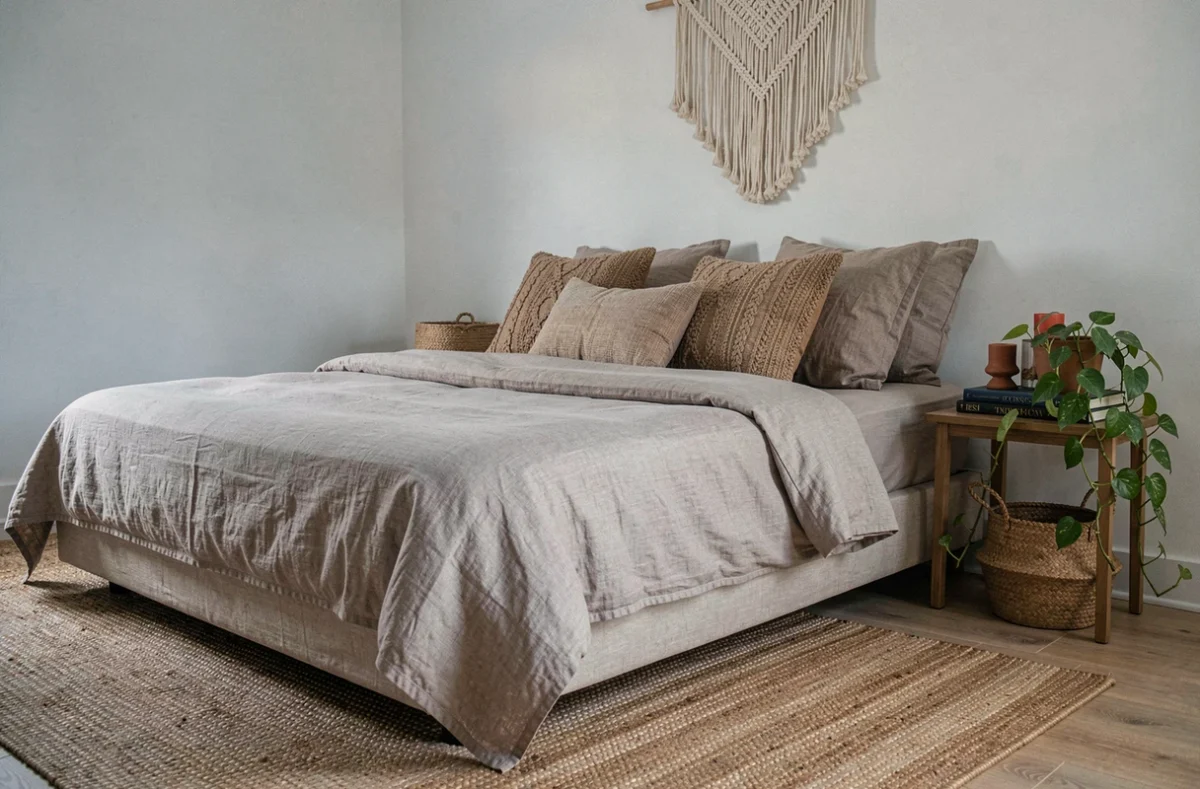
Here are some concrete guidelines for wall colors:
- Dark warm tones (chocolate brown, deep terracotta, forest green) work well on a single wall, facing the source of natural light, to avoid overwhelming the room.
- Light walls opposite (off-white, linen, greige) serve as a light bounce and prevent a cave-like effect.
- Cool colors (glacier blue, concrete gray) can coexist with a warm ambiance if the textiles and wood compensate with tactile warmth.
A coherent palette of three related tones is better than a single color everywhere. Apply the most intense tone to the smallest surface, the lightest to the largest.
The “Collected Over Time” Style: Composing with What You Already Have
The most striking trend in decoration this year moves away from perfectly matched interiors. The so-called “collected over time” style mixes contemporary furniture, antique pieces, travel souvenirs, and handcrafted objects. The result creates a more personal atmosphere than a set bought all at once.
In practice, this means you don’t need to replace everything to warm up a living room. One strong personality object can anchor an entire room: a vintage armchair, a handmade stoneware vase, a 1970s lamp.
The trap to avoid: accumulation without structure. Three objects placed on a shelf with space between them tell a story. Fifteen knick-knacks crammed together create visual noise. It’s better to remove than to add, and then observe what’s missing after a few days.
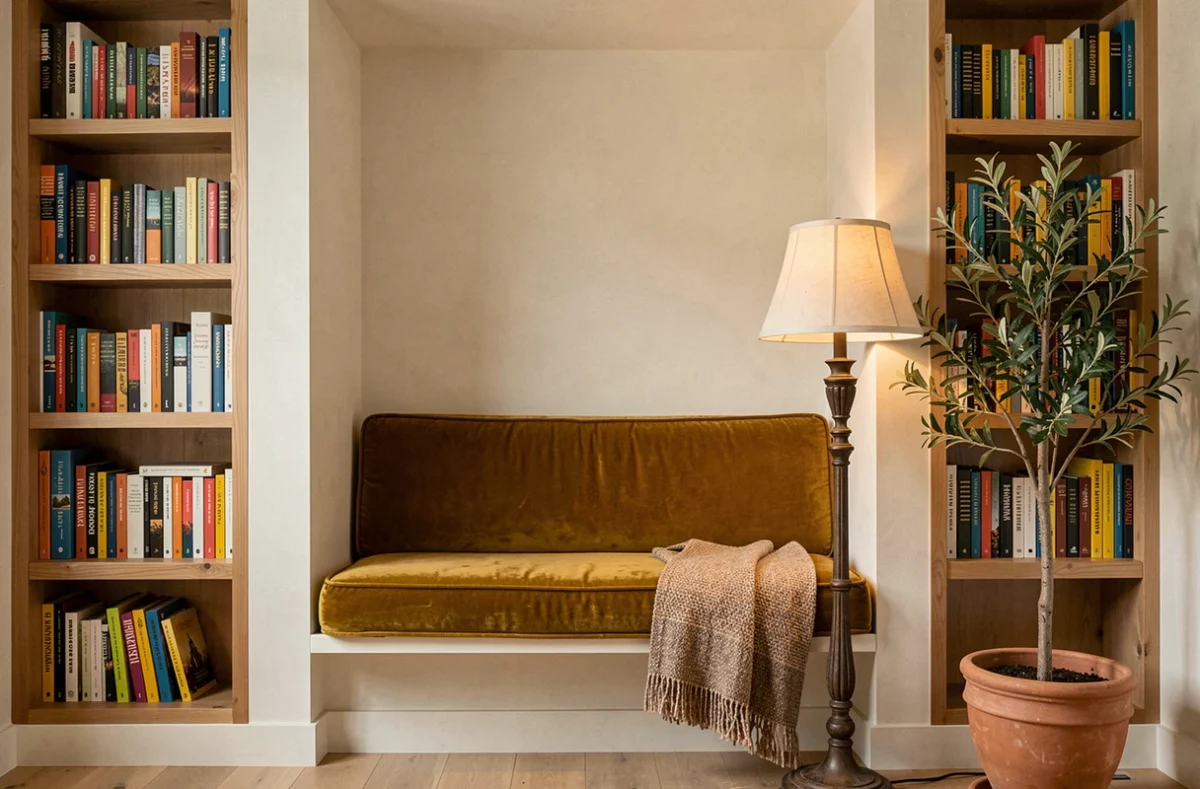
What makes an interior warm is not tied to a particular style or budget. It’s the coherence between light, the materials you touch, and the objects you’ve chosen for real reasons. A space composed gradually, adjusted to daily uses, will always be more inviting than a room decorated in one go.