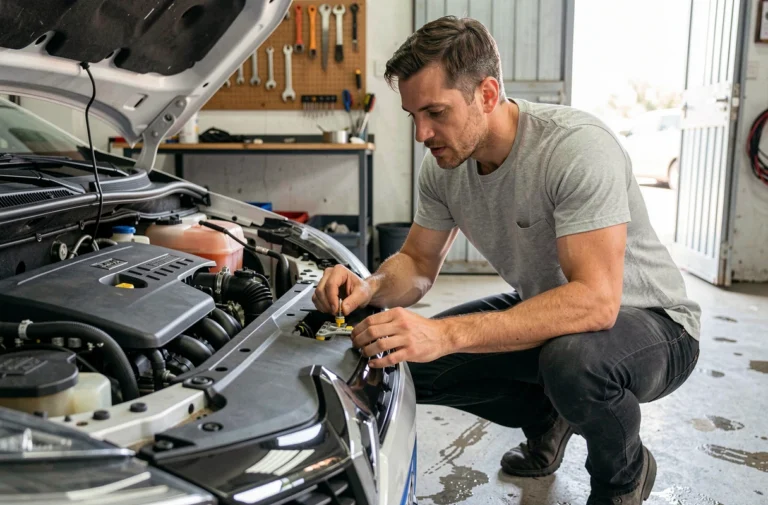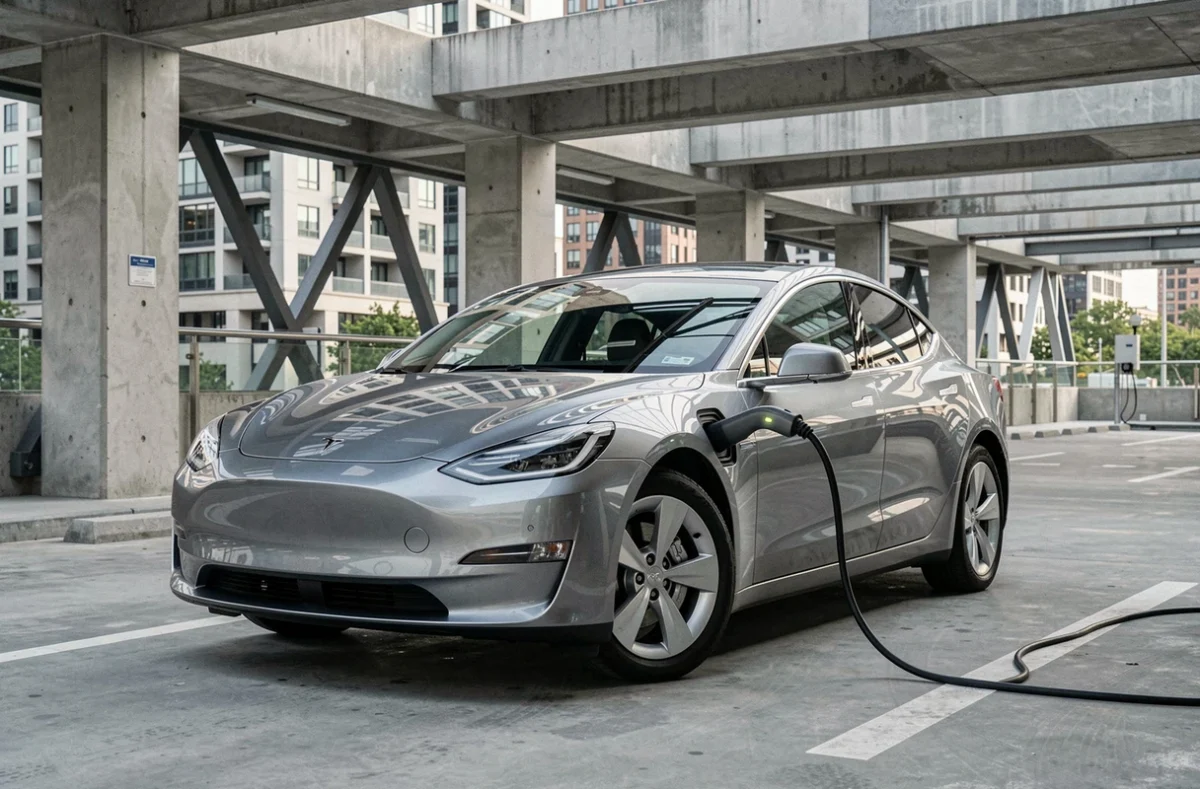
Automotive transport is no longer limited to the mechanics of an engine or the choice of fuel. Since 2025, a series of European regulations redefine what a vehicle must guarantee in terms of data, cybersecurity, and connectivity. These regulatory constraints, often overlooked by the general public, are restructuring manufacturers’ business models and significantly altering the experience for drivers.
European Data Act and connected vehicle data: what changes in 2026
The Data Act (Regulation (EU) 2023/2854) has mandated since September 2025 that users can obtain data generated by their connected objects, including vehicles. This data must be able to be transmitted free of charge to a third party: insurer, fleet manager, independent workshop.
Starting from September 12, 2026, all new connected vehicles launched on the European market must be designed to provide direct, simple, and secure access to this data for the end user. The car thus becomes a data source controlled by its owner, rather than solely by the manufacturer.
The consequences are tangible. A motorist will be able to share their driving data with an insurer to obtain personalized pricing, or transmit it to an independent mechanic without going through the manufacturer’s official network. For companies managing fleets, data portability facilitates the use of third-party management solutions. Several analyses about Auto World transport detail these sectoral developments.

Cyber Resilience Act: cybersecurity becomes mandatory for vehicles
The Cyber Resilience Act, adopted at the end of 2024, imposes cybersecurity requirements on all products containing digital elements sold in the European Union. Connected vehicles are directly affected.
In practical terms, each manufacturer must now integrate security from the design stage of the vehicle and ensure security updates throughout the reasonably expected lifespan of the product. This is no longer a commercial option: it is a legal obligation with penalties.
This constraint redistributes investments. R&D budgets are partially shifting from engine performance to software architecture. A vehicle that does not meet these standards simply cannot be marketed in the European market.
What this means for corporate fleets
Fleet managers must verify that the vehicles acquired comply with the Cyber Resilience Act. A non-compliant vehicle exposes the company to legal risks in the event of an exploited vulnerability. Fleet management solutions that integrate telematics must also meet these requirements, as they continuously process vehicle data.
Software-defined vehicle: the car as an evolving platform
The concept of a software-defined vehicle refers to a vehicle whose main functionalities can be modified, added, or improved through software updates after purchase. This approach transforms the car into an evolving platform.
The same model can see its assisted driving capabilities progress, its user interface change, or new services appear without physical intervention. The vehicle purchased today does not have the same functions as the one delivered six months ago, even if the hardware is identical.
This trend leads to a change in the business model for manufacturers:
- Revenues no longer come solely from the initial sale, but also from subscriptions to features activated remotely (heated seats, advanced parking assistance, power unlocking).
- Development cycles are shortening, as a software update sometimes replaces a physical recall in the workshop.
- The customer relationship is ongoing: the manufacturer remains in constant contact with the vehicle via embedded connectivity.

Autonomous driving and ADAS systems: where does automation really stand
Advanced driver assistance systems (ADAS) now equip the majority of new vehicles in Europe. Automatic emergency braking, lane keeping, adaptive cruise control: these functions fall under level 2 automation, where the driver remains responsible at all times.
The transition to levels 3 and 4, where the vehicle takes over driving under defined conditions, is progressing through regulatory steps. The European Union and several Asian countries have begun to adapt their legal frameworks to allow these systems on certain types of roads and at certain speeds.
Full autonomous driving (level 5) remains a distant goal. The obstacles are not only technological: liability in the event of an accident, coexistence with non-automated vehicles, and the reliability of sensors in degraded weather conditions pose unresolved questions.
The role of 5G connectivity in automation
Communication between vehicles (V2V) and between vehicles and infrastructure (V2I) relies on very low-latency networks. The deployment of 5G on major roadways conditions the reliability of these exchanges. Without suitable network infrastructure, the promises of autonomous driving remain limited to controlled environments.
Electrification and energy management: beyond lithium-ion batteries
Solid-state batteries represent the next expected technological breakthrough. They promise higher energy density, reduced charging times, and better durability compared to current lithium-ion batteries.
Several manufacturers have announced pilot production phases, but large-scale industrial production has not yet been achieved. The manufacturing cost remains the main barrier. Meanwhile, advancements in existing lithium-ion batteries (LFP chemistry, cell-to-pack architecture) continue to improve range and reduce prices for electric vehicles.
- Fast charging stations are multiplying along European highways, gradually reducing range anxiety.
- Bidirectional integration (vehicle-to-grid) allows the vehicle to return energy to the electrical grid, transforming the automotive fleet into a distributed storage capacity.
- Recycled materials and the circular economy are becoming regulatory compliance criteria for new batteries.
Automotive transport is entering a phase where European regulation dictates as much the pace of innovation as the technology itself. Data Act, Cyber Resilience Act, embedded cybersecurity standards: manufacturers who do not master these legal frameworks lose access to the market, regardless of the quality of their vehicles.