The message “injection to be checked” on a Clio 5 does not always point to a failing injector. On this model, the alert can be triggered by an anti-pollution threshold, a fault in the AdBlue system on Blue dCi diesel versions, or simply by an engine software that requires an update. Before disassembling anything, it is essential to know what you are measuring and what you are comparing.
OBD Codes on Clio 5: What a Generic Readout Reveals and Its Limitations
The first instinct accessible without mechanical skills is to connect an OBD reader to the diagnostic port located under the steering wheel on the driver’s side. A device costing a few dozen euros or a smartphone app is sufficient to display the fault codes recorded by the engine control unit.
The problem is that the generic OBD readout does not cover all Renault faults. If the message remains displayed while no code appears, the fault is either intermittent or related to a proprietary system that only the Renault CLIP tool (or a compatible equivalent) can query. Before concluding a false fault, a second readout with a manufacturer tool is recommended.
To better understand how to check the injection on Clio 5 with consumer-grade equipment, you must first identify the exact engine type of the vehicle. This point radically changes the interpretation of the codes.
| Type of Readout | Accessible Codes | Limitations |
|---|---|---|
| Generic OBD (ELM327, smartphone app) | Universal P0xxx codes (air/fuel mixture, lambda sensor, rail pressure) | Does not read specific Renault codes, intermittent faults sometimes invisible |
| Manufacturer Tool (Renault CLIP or equivalent) | P0xxx codes + manufacturer codes (AdBlue, SCR, ECU updates) | Access limited to professionals or through an equipped garage |
Petrol TCe or Blue dCi Diesel Engine: Two Distinct Diagnostic Paths
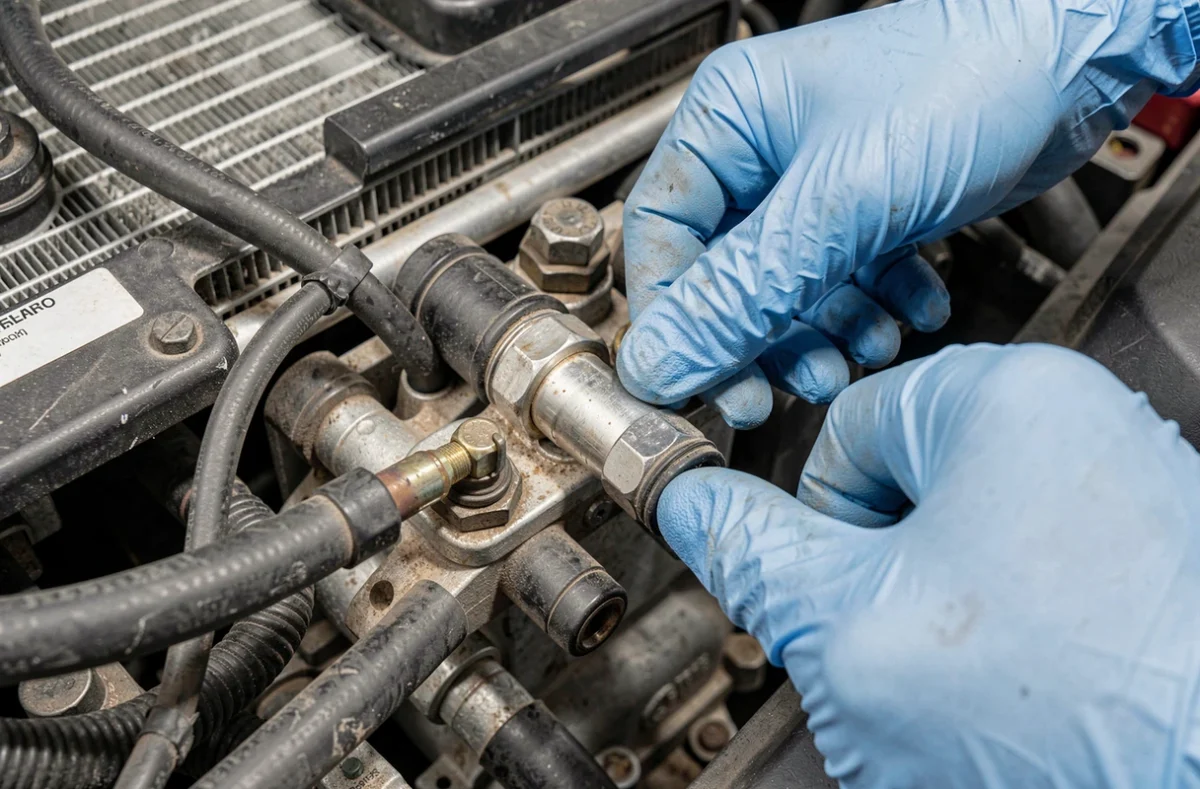
The Clio 5 comes in two main engine families, and the message “injection to be checked” does not mean the same thing depending on the engine installed under the hood.
Clio 5 with 1.0 TCe 90 Petrol Engine
This engine uses indirect injection. The checks accessible without heavy tools mainly concern the condition of the air filter, the tightness of the fuel cap (a leak in the EVAP circuit is enough to trigger the warning light), and a visual inspection of the intake hoses.
The codes P0171 (too lean mixture) and P0172 (too rich mixture) point to a problem with the lambda sensor or air intake. These two codes can be read with a generic OBD reader.
Clio 5 Blue dCi Diesel
On diesel versions, the AdBlue/SCR system is often the real cause of the message. The codes P204F and P20E8 point respectively to insufficient performance of the reductant system and too low reductant pressure. A crystallization of AdBlue, a faulty pump, or a NOx sensor out of tolerance can trigger the alert without any fuel injector being involved.
A non-expert driver should therefore start by checking the registration document (field P.3) to confirm the engine type before interpreting the warning light.
Renault Technical Campaigns and ECU Updates on Clio 5
Before replacing a part, a often-overlooked check is to inquire with the Renault network about ongoing technical campaigns associated with the vehicle’s VIN. Some “injection to be checked” alerts on Clio 5 stem from an engine management strategy that can be corrected with a simple software update of the ECU.
This step costs nothing: just contact a Renault dealer with the VIN number (visible on the registration document or at the bottom of the windshield on the driver’s side). The dealer checks in their database if a recall or service campaign concerns the vehicle.
- Note the VIN on the registration document (field E) or on the plate visible at the bottom of the windshield
- Call or email the nearest Renault dealer, providing this number
- Explicitly ask if there is a technical campaign, manufacturer recall, or ECU update for this Clio 5
- If a campaign exists, the correction is generally covered by Renault, even out of warranty
This step eliminates a significant portion of false alerts before engaging in mechanical diagnostics.
Visual Checks and Verifications Accessible Without a Garage
Some check points require neither tools nor special skills. They allow for ruling out simple causes before going to a professional.
- Fuel Cap: a poorly tightened cap or one with a damaged seal can cause a fault code related to the fuel circuit’s tightness. Remove the cap, check the seal’s condition, and screw it back on firmly
- AdBlue Level (diesel only): a low level triggers a series of progressive alerts. The dashboard usually displays a dedicated warning, but on some versions, the message “injection to be checked” appears first
- Air Filter: a clogged filter alters the air/fuel ratio. On the 1.0 TCe, the air filter housing can be unclipped without tools. A visibly black or clogged filter deserves immediate replacement
- Visible Electrical Connectors: an oxidized terminal or a disconnected connector on the engine harness can generate an intermittent fault. A visual inspection of the top of the engine, with the hood open, is sufficient to spot a loose connection
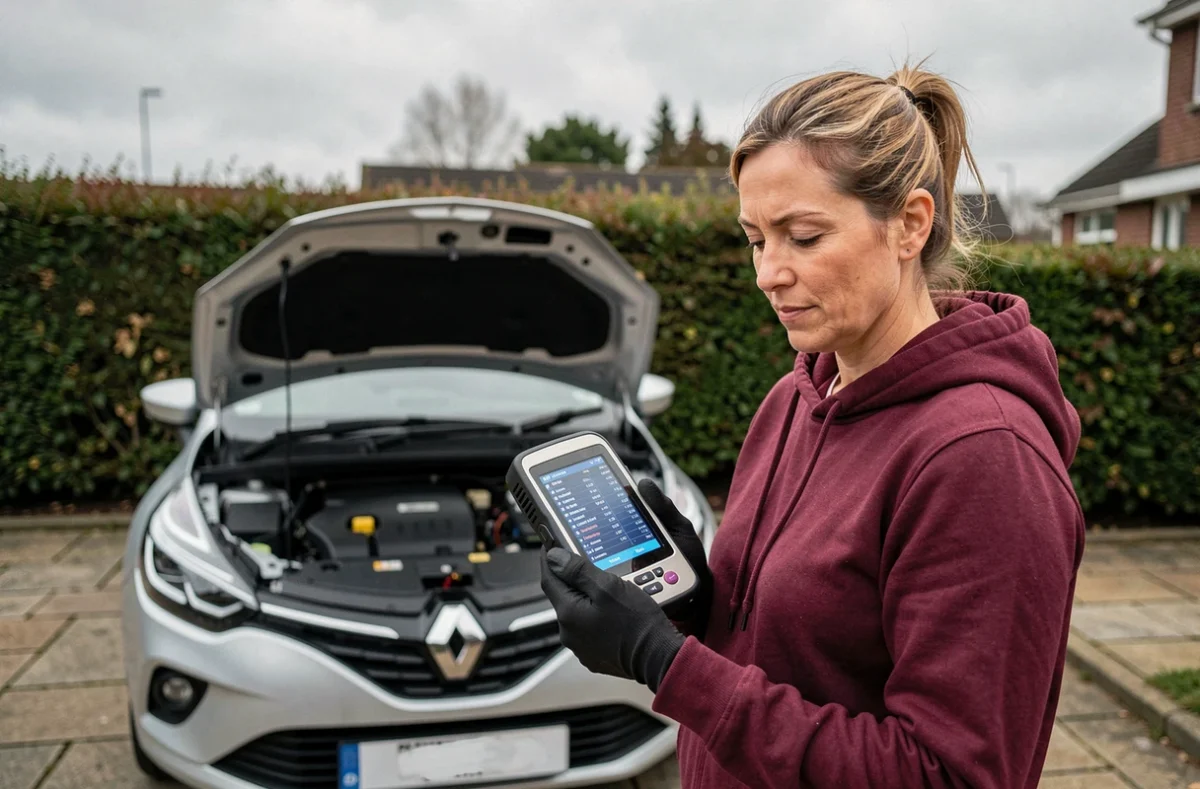
If none of these checks reveal any anomalies and the OBD code remains absent or generic, reading with a manufacturer tool remains essential. An independent garage equipped with a compatible Renault tool usually charges much less for this service than a dealership, for the same result on the fault codes.
The determining factor remains the engine type. On a TCe petrol engine, the most common causes can be read with a low-cost OBD device. On a Blue dCi diesel, the AdBlue/SCR system almost always requires a manufacturer-level tool for reliable diagnostics.