The insulation sector is going through a phase where announcements of innovation are multiplying, but the actual availability of products on site remains delayed by several years. Between high-end bio-based materials, industrial recycling of waste streams, and massive investments to adapt production lines, the landscape is reshaping at a pace that public catalogs do not yet reflect.
Textile Waste Recycling in Insulation: What Industries Are Really Deploying
Online content about insulation frequently mentions hemp, cellulose wadding, or wood wool. However, it overlooks a significant trend driven by major corporations: the integration of textile waste and recycled glass directly into mineral wools.
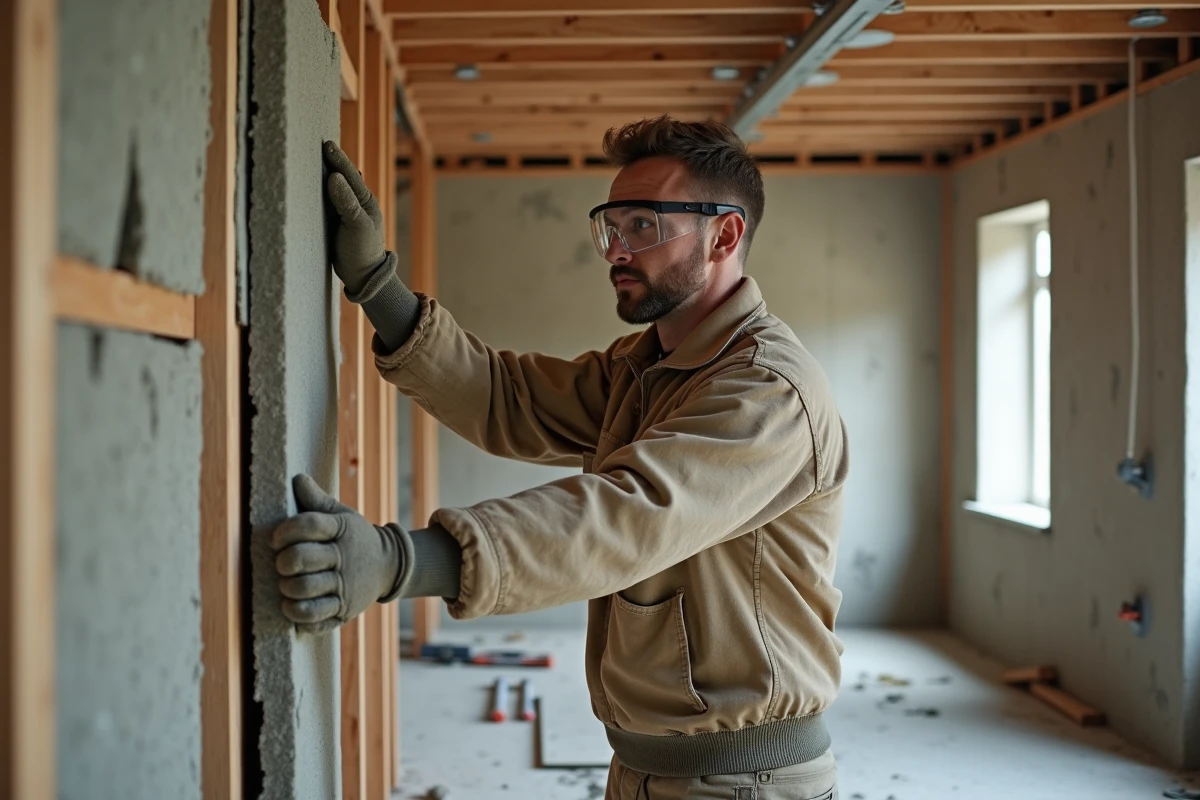
Since 2023-2024, Saint-Gobain ISOVER has been rolling out ranges of mineral wool that incorporate an increasing share of recycled materials. The stated goal is a reduction in carbon footprint with equivalent thermal performance. The positioning does not rely on a new material but on transforming the supply flow of an existing and widely distributed product.
This approach fundamentally differs from bio-based insulators: it does not seek to replace mineral wool but to modify its composition without changing installation habits. For professionals following the news on Maisonisor, this is a signal that the traditional industrial sector is not yielding ground to plant-based alternatives but is incorporating environmental constraints into its own processes.
Field feedback varies on this point: some craftsmen report differences in texture or mechanical performance with the new references that have a high recycled content. The available data does not allow for a conclusion regarding a measurable performance gap under real conditions.

Industrial Investments for Low-Carbon Insulation: The Unilin Panels Example
Talking about material innovation without addressing the industrial capacity to produce in volume is akin to describing a prototype without a market launch timeline. The Unilin Panels group has announced over 100 million euros in investment at its site in Oostrozebeke, Belgium.
The program covers the installation of a next-generation press, automation of logistics, and a complete overhaul of production lines. The dual objective is to increase the share of recycled materials in the panels and improve their environmental performance. The targeted deadline is between 2028 and 2029.
This type of investment illustrates a temporal gap that articles on “insulation innovations” often overlook. A material may exist in the lab or in small series for several years without being available at a competitive price in the French renovation market. The increase in industrial capacity conditions the actual adoption of an insulator, much more than its technical data sheet.
What This Changes for the French Energy Renovation Market
Buildings represent a major share of final energy consumption in France. The carbon neutrality goals by 2050 imply a renovation pace well above the current rate. Without adapted production lines, low-carbon insulators will remain confined to niches.
The question also arises for public aid. Support mechanisms for energy renovation guide demand, but the supply of low-footprint materials does not always keep pace. A craftsman wishing to offer a high-performing recycled insulator may encounter supply delays or additional costs that the aid scales do not compensate for.
Bio-Based Insulators in France: Between Progress and Technical Limits
Hemp bricks are gaining ground in interior renovation. Their appeal lies in good hygrothermal behavior (natural humidity regulation) and accessible implementation for trained craftsmen. However, their performance in pure thermal insulation remains below that of mineral wools or vacuum panels, at equal thickness.
- Hemp and wood wool offer superior summer comfort compared to conventional insulators due to their thermal inertia, a criterion increasingly scrutinized with climate change.
- Cellulose wadding, made from recycled paper, remains one of the most competitively priced bio-based materials, but its installation by blowing requires specific equipment and appropriate training.
- Insulators made from mycelium (fungal filaments) are appearing in specialized publications. They combine lightness, biodegradability, and reasonable thermal performance, but their industrial-scale production is not yet reliably documented.
The enthusiasm for bio-based materials should not obscure a logistical reality: the supply chain for plant-based insulators remains fragile in France. The volumes produced locally do not meet the potential demand linked to energy renovation goals.
Aerogel and Vacuum Insulation Panels: Where Thin Insulation Stands
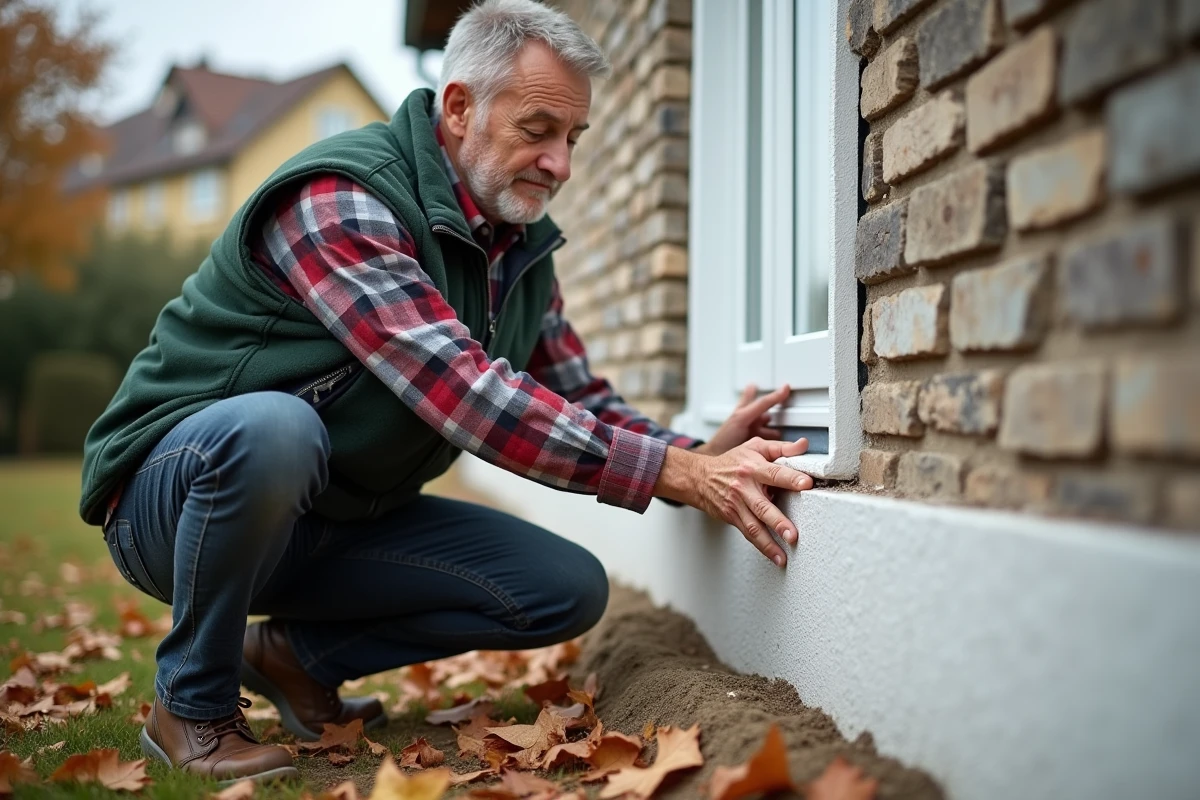
Aerogel remains the most efficient insulating material in terms of thermal conductivity relative to thickness. Its use is primarily developing in cases where available space prohibits traditional insulation: party walls, window reveals, historic buildings.
Vacuum insulation panels operate on a similar principle of thickness reduction. Their mechanical fragility (a perforation nullifies the insulating effect of the vacuum) limits their use to well-controlled configurations. Any cutting on site is excluded, which requires precise planning in advance.
Cost and Accessibility in the Renovation Market
The price of aerogel and vacuum panels remains significantly higher than that of traditional insulators. This difference is justified in projects where the gain in usable space offsets the material’s additional cost. For a house with thick walls and few space constraints, these solutions remain economically difficult to justify.
The training of installers is another barrier. A poorly installed thin insulator loses most of its advantage. Field feedback shows that incidents related to incorrect installation of vacuum panels are increasing, although consolidated statistics are not yet available at this stage.
The insulation sector in France is advancing on two parallel fronts: on one side, adapting existing industrial sectors to recycling and low-carbon solutions, and on the other, the slow maturation of breakthrough materials like aerogel or mycelium. The actual pace of deployment will depend less on laboratory performance than on the ability of industries to produce in volume and craftsmen to train in new installation techniques.