
A rainy Sunday, no car, ten euros in your pocket: the question isn’t whether you feel like doing something, but finding an activity that fits those constraints. Most leisure guides list dozens of ideas without saying what they cost or whether they’re available near you. There’s another way to approach the subject: start with the practical obstacles and identify leisure activities that fit into everyday life.
Free activities with no booking required: what’s left when money is tight
The long-term rise in the cost of recreational and leisure services makes it worth being selective. Before looking for an activity, save time by listing the options that cost nothing and require no sign-up.
Walking remains the most underrated leisure activity. Not a hike that calls for technical gear, but an hour-long walk within a two-kilometre radius, varying your route each time. Local paths, riverbanks and forest edges: most towns and villages have marked trails or greenways that are free to access.
Among the leisure ideas featured on Buzz du moment, you’ll find practical tips for discovering these kinds of activities, including options that require neither equipment nor travel.
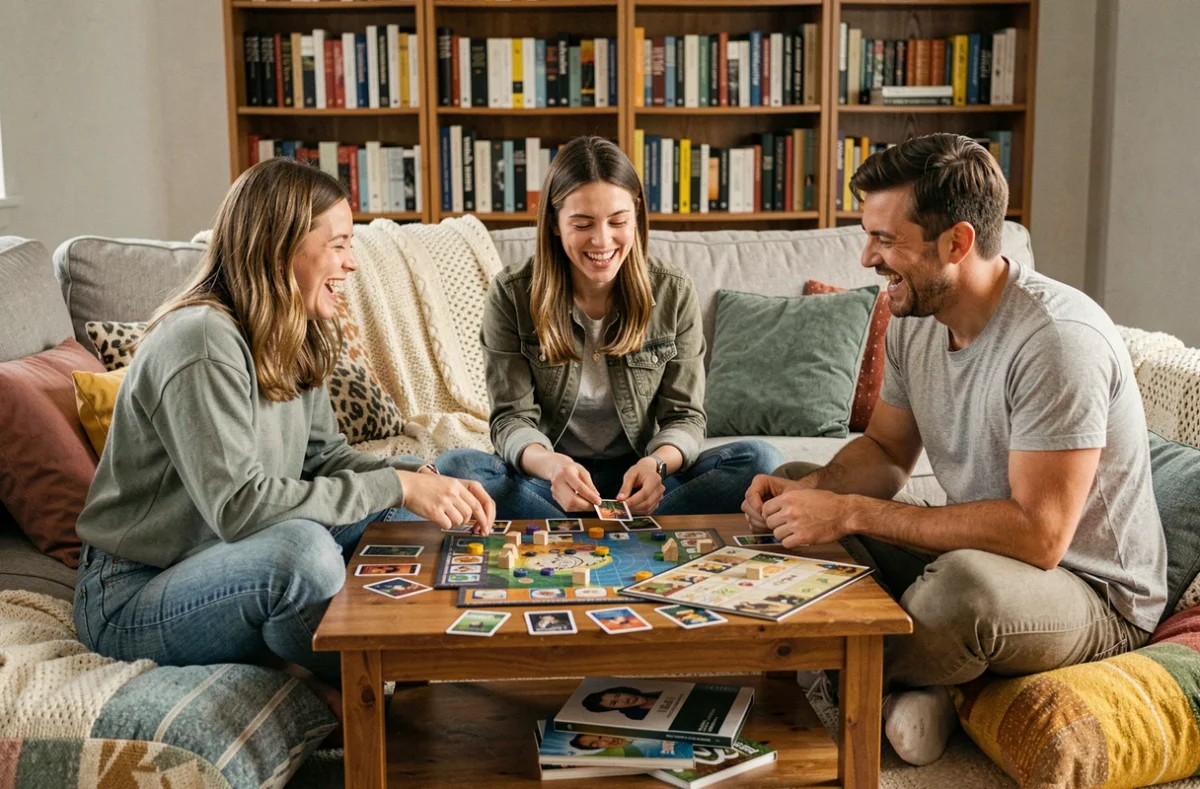
Drawing, reading at the local library, and playing card or board games with what you already have at home make for a solid foundation. These activities work on your own, as a couple or with family, with no waiting or time constraints.
- Local libraries: free borrowing of books, comics and sometimes board games and DVDs, with opening hours often extended on Saturdays
- Public parks and gardens: free to enter and ideal for relaxing, light exercise or playing with children
- Local events: markets, flea markets and neighbourhood festivals, often advertised on community noticeboards or the town hall website
- Outdoor exercise without joining a club: running, cycling on a bike path or doing floor exercises in a park

At-home activities: cook, make things and play without screens
When getting around is difficult (no driving licence, infrequent public transport in rural areas or physical limitations), home becomes the main place to have fun. The trap is to fall back on screens alone.
Cooking is a creative hobby you can enjoy with whatever you have in your cupboards. Trying one new recipe each week, even a simple one, breaks up the food routine and fills an hour or two. You don’t need specialist equipment: a frying pan, an oven and a few basic ingredients are enough to make pastries or dishes from around the world.
Light DIY projects (repairing a piece of furniture, customising an object or sewing a hem) keep your hands busy and give you something tangible to show for it. The satisfaction of making or fixing something yourself has no digital equivalent.
When it comes to games, we often underuse what we already own. A standard deck of 52 cards offers dozens of variations, from rummy to belote. Puzzles, crosswords and sudoku take up little space and can fill anything from a fifteen-minute break to an entire afternoon.
Outdoor activities based on what’s available locally: choose what suits your area
Leisure options vary widely from one area to another. The way young people use the Pass Culture makes this clear: the activities they choose depend directly on what’s available nearby. The same is true for all ages.
In urban areas, there are plenty of options, but they’re not always easy to find. Local associations often offer workshops on a pay-what-you-can or low-cost basis (pottery, amateur theatre, choir or community gardening). These sessions aren’t always listed online. A visit to the town hall or community centre can give you a more complete picture than any search engine.
In rural and suburban areas, the mountains are increasingly popular for a range of summer activities beyond skiing. But if there’s no mountainous terrain nearby, other options are available: river fishing (an annual permit at a low price), birdwatching or foraging for edible wild plants (using a reliable guide to avoid mistakes).
The deciding factor isn’t the type of activity, but how long it takes to get there. A leisure activity more than thirty minutes away can quickly become a logistical chore, especially during the week. A modest activity ten minutes away is better than a spectacular one an hour’s drive away.
Mix up your everyday leisure activities without taking on too much
Doing more activities doesn’t necessarily mean having more variety. We all know the phase where we sign up for three workshops, buy equipment for two hobbies and give it all up within a month. Rotating activities works better than piling them on.
A simple approach: alternate a physical activity, a hands-on activity and a quiet activity throughout the week. A brisk walk on Monday evening. An hour of drawing or cooking on Wednesday. Reading or a board game on Friday. This routine prevents boredom without creating pressure.
A common mistake is trying to improve at every activity. With an everyday hobby, the goal isn’t performance. You can draw badly and still enjoy it. You can make a dish that turns out badly and try again the following week. A hobby lasts when it doesn’t create any obligations.
Your budget shapes your choices, travel time narrows them down, and the time you have available determines what’s realistic. Starting with these three practical filters (how much it costs, how long it takes to get there and how much time it requires) helps rule out appealing but unrealistic ideas. What’s left, however modest, is something you can stick with.