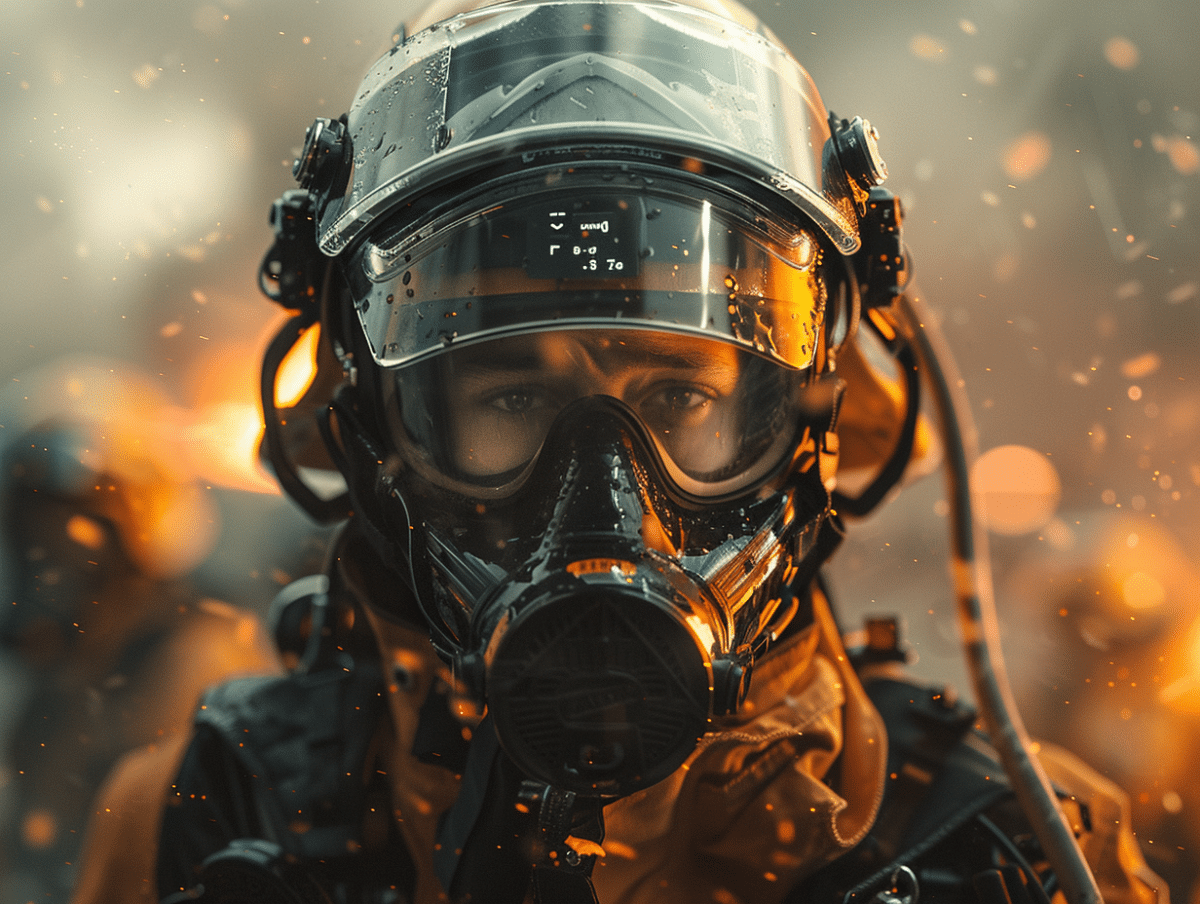
In the field of civil security, firefighters face extreme situations daily. To maximize their effectiveness and best protect citizens, the adoption of advanced technologies has proven fundamental. The use of drones for aerial reconnaissance, geographic information systems for precise mapping of disaster areas, and the integration of artificial intelligence to quickly analyze data and predict fire patterns illustrate this transformation. These technological innovations are not limited to the field; they also extend to training with virtual reality simulators that prepare firefighters for complex scenarios.
Cutting-edge technologies for emergency interventions
Artificial intelligence, smart drone, captive balloon: these terms, once reserved for research laboratories, are now part of the daily lives of firefighters. The management of emergency interventions is transforming under the influence of these cutting-edge technological solutions. The use of these new technologies by firefighters is not merely a gadget. On the contrary, they emerge as decisive instruments in improving the efficiency of rescue operations.
The webcast 58, recently broadcasted, testifies to this transformation. It highlights the actions of the Paris Fire Brigade (BSPP), which has equipped itself with an autonomous drone developed by Azur Drones. This technology significantly reduces response times in cases of drowning in the Seine, thereby increasing the chances of survival for victims. Similarly, the SDIS of Haute-Garonne and the company HD Rain are working together on the implementation of advanced weather sensors capable of accurately analyzing precipitation and thus anticipating flood risks.
The association Atraksis, bridging the gap between AI-specialized startups and departmental fire and rescue services (Sdis), attests to the desire to integrate these advancements into the core of rescue strategies. Atraksis, in close collaboration with innovative entities such as Pyronear, is focused on developing tools to combat wildfires, using cameras and AI-based detection software.
A-NSE has developed a captive balloon that provides continuous aerial surveillance, which is essential for the rapid detection of fire outbreaks. These technologies, like the FireDrone, capable of crossing a wall of flames, open up new perspectives for fire prevention and intervention. The fight against flames is now armed with tools that match current challenges, and firefighters, more than ever, position themselves as true technological sentinels at the service of the population.
The challenges and perspectives of technological innovation among firefighters
The adoption of advanced technologies, such as augmented reality and virtual reality, opens up a realm of possibilities for improving training and the effectiveness of firefighter interventions. Immersive simulations allow for the recreation of complex intervention scenarios, thus confronting firefighters with nearly real situations, but in a controlled and secure environment. The General Directorate of Civil Security and Crisis Management (DGSCGC), attached to the Ministry of the Interior, is keenly interested in these innovations that promise to enrich teaching and preparation methods for rescue forces.
The Congress of Firefighters of France, held in Toulouse, showcased presentations of innovative projects, such as FireCaster from CNRS, aimed at better understanding and predicting the behavior of wildfires. The refined knowledge of incendiary phenomena is fundamental for optimizing fire-fighting strategies. The TechForFire project from the University Institute of Industrial Thermal Systems, affiliated with Aix-Marseille University, offers real-time analysis tools to assist firefighters in their operational decisions.
These technological advancements come with their share of challenges. Training firefighters on these new tools, maintenance and interoperability of systems, as well as issues related to data security are central concerns. Robots, developed by institutions such as Imperial College London and the Swiss research institute Empa, require meticulous integration within intervention teams to be fully operational and effective. Collaboration between firefighting bodies, research centers, and startups is therefore essential to transform these challenges into concrete opportunities for civil security.