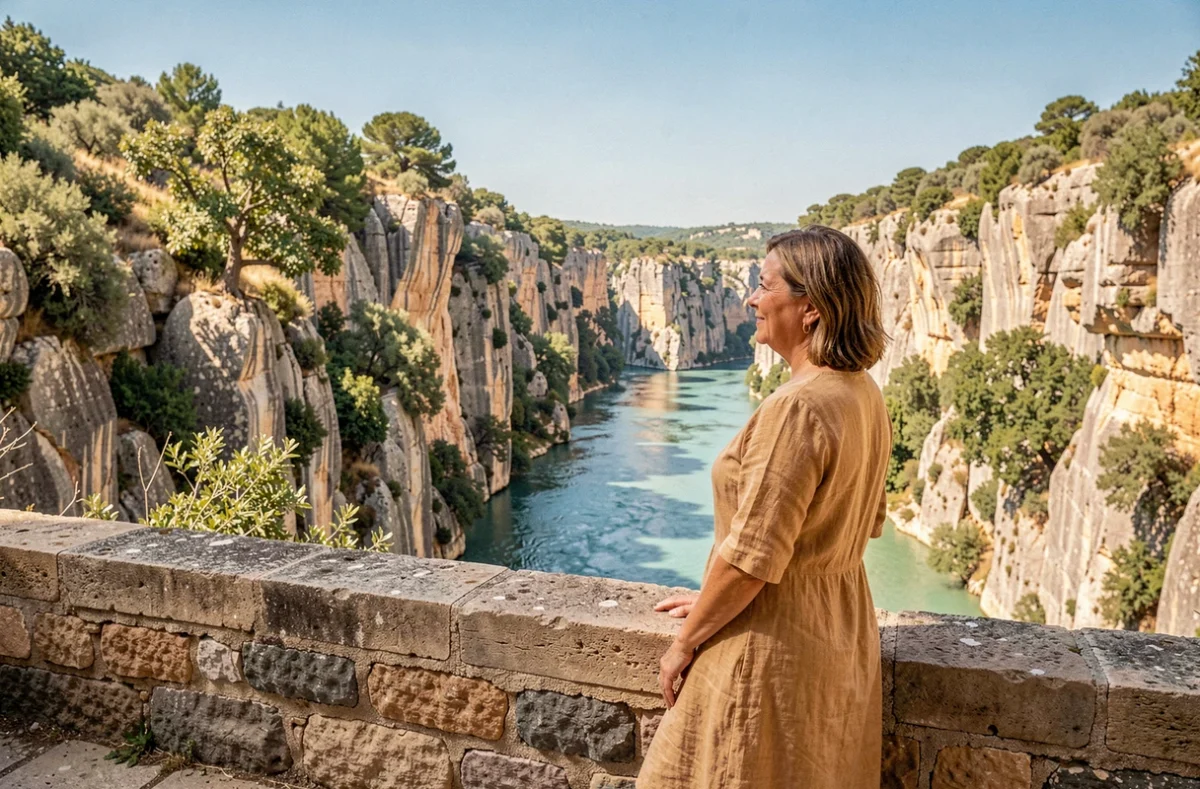
The Cèze rises in Lozère, flows through the Gard Cévennes and joins the Rhône after a journey of around 100 kilometres. The area it waters combines limestone gorges, hillside vineyards and hilltop medieval villages. This diversity draws visitors every year in search of swimming, hiking and heritage discoveries. Water resources have become a more pressing concern in recent years, changing the landscape for both users and local stakeholders.
Water restrictions and swimming in the Cèze: conditions vary by site
Swimming access is not the same throughout the Cèze basin. Water quality and safety vary from one site to another, and conditions can change over the course of a season depending on low-water levels and prefectural orders.
Swimming remains prohibited at the Sautadet waterfalls because of the powerful currents and cavities carved into the rock. Despite their spectacular beauty, these potholes regularly cause accidents. Hiking and viewing the falls from the riverbanks are still possible, but entering the water is strictly forbidden.
Further downstream, several lakes and river beaches allow swimming during the season, subject to checking the latest water quality test results and local restrictions. The Ceze portal provides visitors with a gateway to activities and accommodation in the area.
Drought has also affected aquatic life in smaller tributaries. After periods of low rainfall, stream wildlife takes time to recover. This goes beyond recreational concerns: it raises questions about the area’s ability to sustain its ecosystems as water-use restrictions become more frequent.
Vineyards in the Cèze Valley: wine tourism as an additional draw
Viticulture has long been part of the valley’s history. Local appellations, particularly around Bagnols-sur-Cèze, produce red, rosé and white wines from the Gard Côtes du Rhône terroirs. Drought and other climate-related hazards are putting vineyards under pressure, prompting winegrowers to seek additional sources of income.
Wine tourism is emerging as a practical response to this vulnerability. Some estates offer vineyard walks paired with tastings. These events bring together wine production, landscape heritage and tourism.
For these businesses, the goal is not purely commercial. Diversifying their activities allows them to showcase local expertise while raising visitors’ awareness of the challenges of farming in dry conditions. The connection between the local way of life and the vulnerability of water resources becomes a reason to visit, rather than simply a management problem.
Natural heritage and caves: an attraction whatever the weather
The Cèze area has underground attractions that complement its outdoor activities. The caves and sinkholes in the region are open to visitors even in extreme heat or when swimming restrictions are in place.
- The Cèze Gorges offer hiking trails above the river, with views of the cliffs and riverside woodland.
- The developed caves in the Gard area let visitors explore geological formations in cool surroundings, regardless of surface water conditions.
- The hilltop medieval villages (Montclus, La Roque-sur-Cèze) add built heritage to the area’s natural appeal.
This combination of water-based, underground and cultural activities gives the area a capacity to adapt to seasonal conditions that other river destinations do not always have.
Accommodation and environmental practices in the Cèze area
Some tourism accommodation providers in the Cèze Gorges are no longer content simply to promote the natural setting. Practical environmental measures are beginning to shape what they offer, going beyond labels and green marketing.
Campgrounds and estates in the area are investing in water management, waste reduction and the protection of surrounding habitats.
Tourism in the Cèze area depends directly on the health of the natural environment. Accommodation providers that take this into account in their day-to-day operations are also protecting their own business model. A degraded river or diminished landscape would deprive the area of its main selling point.
Balancing tourism appeal with vulnerable water resources
Summer visitor numbers put pressure on a river basin already affected by drought. Water restrictions vary by location and season, making it harder for visitors and tourism professionals alike to plan activities with certainty.
Several questions remain unanswered. Data on low-water flows in the Cèze and its tributaries is not always consolidated across the area, making it difficult to anticipate periods of restriction. Coordination between municipalities, river management bodies and tourism stakeholders is improving, but there is no single solution to balancing agricultural, domestic and recreational water use.
An area whose appeal depends on water must also take responsibility for managing it. The Cèze Valley illustrates this tension: its natural heritage, vineyards and swimming spots form a coherent whole, provided the resource that connects them remains sufficient for all uses. The coming seasons will show whether local initiatives, from wine tourism to eco-friendly accommodation, are enough to maintain this balance.