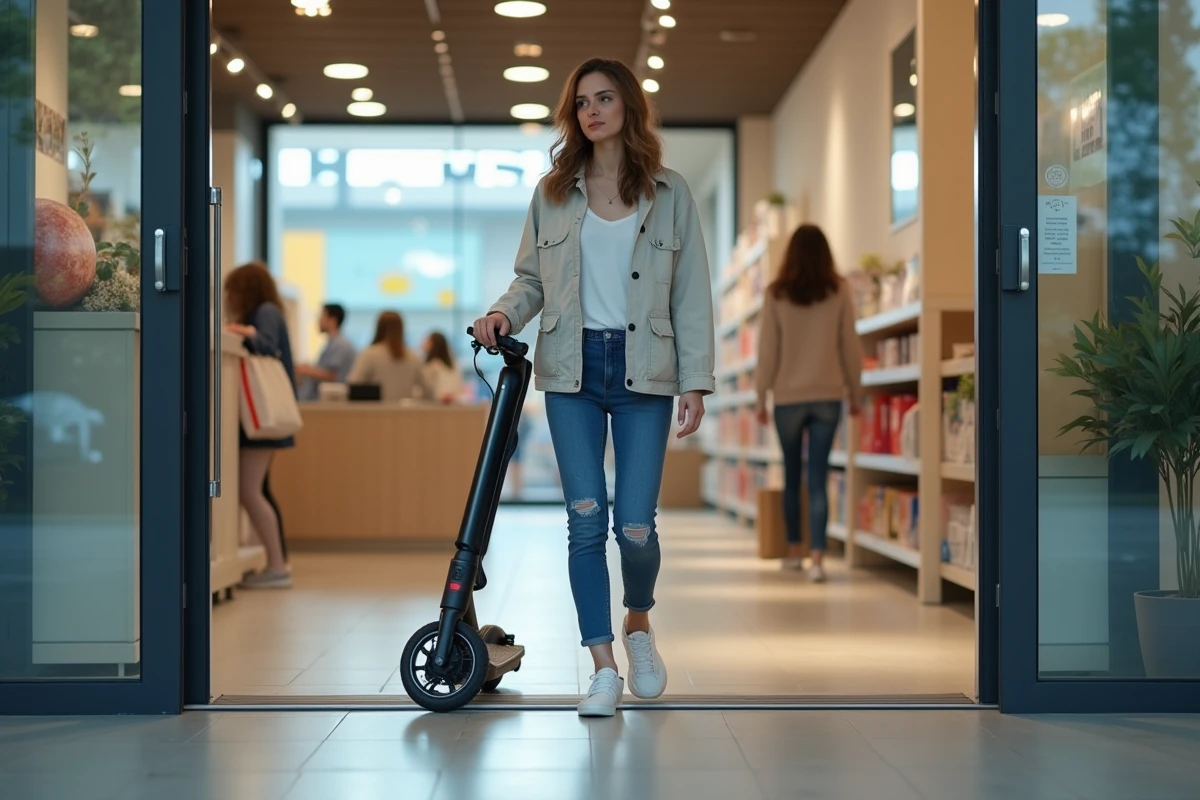
Entering a store with a scooter is not trivial. While some establishments display a clear prohibition, others allow it, provided certain rules are followed. There is no national text that formally prohibits the entry of a scooter into a business: the decision always belongs to the owner or manager of the premises. Depending on the size of the device, its cleanliness, or the current crowd, the reception can quickly change tone.
In light of the increasing number of thefts outside stores, many are looking for a solution to avoid leaving their scooter outside. However, even when politely asking at the reception or equipping themselves with a lock, there is no guarantee of absolute protection.
What French law says about the entry of electric scooters into stores
French legislation does not explicitly address the access of electric scooters to commercial spaces. No article of the highway code or regulatory text targets the act of entering a store with a motorized personal transportation device (EDPM). The final decision rests with the merchant, who has the right of admission to their private property.
The law primarily focuses on use on public roads. To circulate, each electric scooter must have a braking system, a horn, and reflective devices. The maximum allowed speed must never exceed 25 km/h. Civil liability insurance is mandatory, intended to cover any bodily injuries or material damages caused to others. Inside stores, these obligations do not apply, but they remind us how strictly regulated these devices are.
The question of access to stores raises issues of pace and safety. Law enforcement does not intervene unless there is an incident. Many brands refuse entry to bulky scooters to avoid inconveniencing customers and to limit the risks of falls or breakage.
To obtain details on the rules for scooters in stores, simply consult the notices displayed at the entrance or read the dedicated page “Scooter in store: what you need to know about the rules and etiquette.” Practices vary from one establishment to another: some allow folded scooters, while others require them to stay outside.
Insurance and equipment obligations are designed for the road, not for access to a store. But a merchant retains the right to refuse any item deemed cumbersome or unsuitable for circulation in the aisles.
Can you really ride your scooter inside a store?
Moving a scooter through the aisles of a store, even slowly, is not without consequences. There is a risk of knocking over a display, bumping into a customer, or simply obstructing traffic: this practice remains rare. In most cases, you must carry your scooter by hand and often fold it before passing through the door.
Instructions are generally explicit: pictograms, signs, or staff recommendations indicate the procedure to follow. Some large chains prohibit all rolling devices for safety and organizational reasons. Others, in the minority, tolerate riding the scooter as long as it remains turned off and under control.
Here are the main guidelines to follow if you wish to enter with a scooter:
- Always park the device outside pedestrian areas inside.
- Follow the staff’s instructions, who may ask you to leave the scooter at the reception.
- Keep in mind that there are no bicycle lanes inside: the aisles are not meant for riding a scooter.
In the city, the electric scooter has its place on bicycle lanes or pedestrian areas. But once you pass through the store’s door, it must comply with the often strict internal rules that aim to ensure safety and shopping comfort for all.
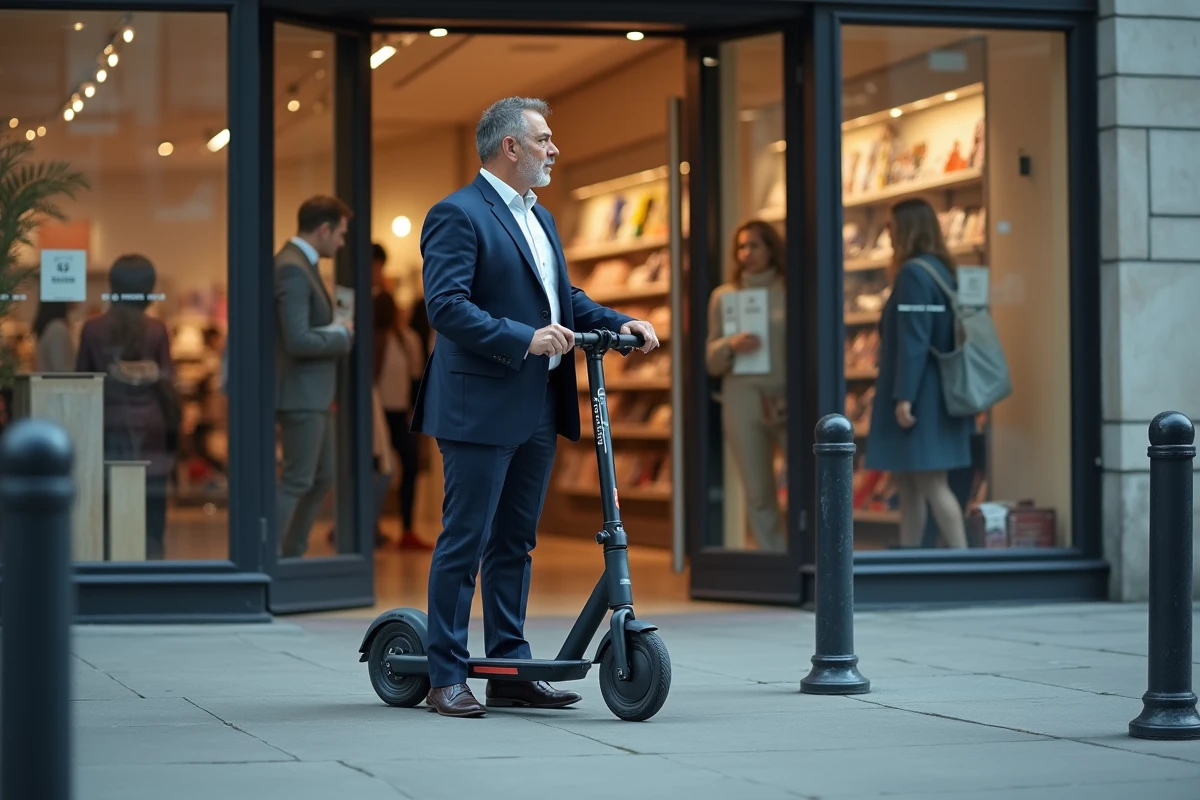
Thefts and damages: essential tips for securing your scooter while shopping
Leaving an electric scooter outside is a real risk. Insurance companies report a continuous rise in thefts, especially in large cities, where most users have no choice but to lock their device outside. During the day, it only takes a few minutes of inattention for a scooter to disappear.
Some simple actions to limit unpleasant surprises:
- Opt for a solid lock, certified, made of hardened steel. Key or combination models offer better resistance to cutting attempts.
- Always secure the scooter to a fixed point, ideally in a busy or monitored area. Simple barriers should be avoided: look for dedicated racks or secure spaces when possible.
- Remember to remove all removable accessories: light, speedometer, smartphone holder. This reduces temptation and limits damage in case of a theft attempt.
The best defense remains vigilance. Note the serial number of your scooter, keep the receipt safe, and check your insurance conditions. Some companies only cover theft or damage if the scooter was properly locked. Consider asking store staff if there is a locker or specific area for devices. It’s better to prevent than to lose your means of transport in a few minutes.
As soft mobility becomes established everywhere, managing scooters in stores remains a fluid area. Tomorrow, perhaps, every business will display its “scooter friendly” logo or, conversely, close its doors to these new vehicles. For now, it’s best to inform yourself before crossing the threshold and keep an eye on your handlebars as much as on your basket.